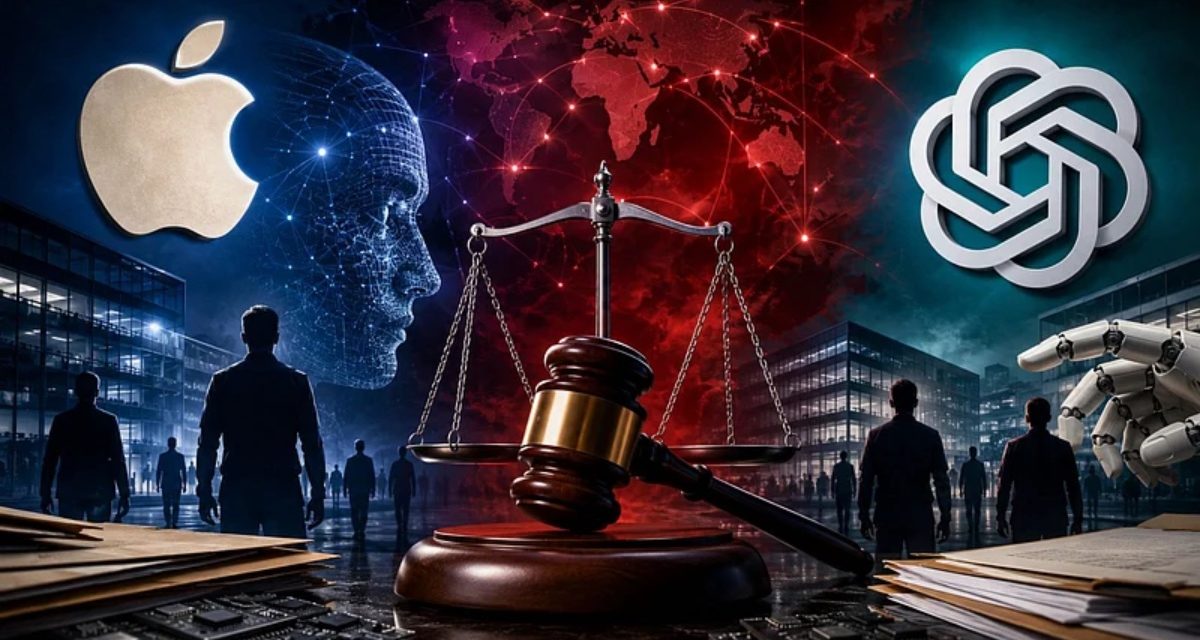
Apple has asked the court to issue a preliminary injunction, arguing that it would prevent its trade secrets from becoming further embedded in OpenAI’s hardware development while the case plays out, reports 9to5Mac.
This is after OpenAI accused Apple of improperly adding new evidence to its trade secrets case. Here’s Apple’s response to those accusations in its filing: Rule 7-3(d)(1) permits a party to object to new evidence in a reply brief, but cautions that the filing “may not include further argument on the motion.” Defendants did not comply with this restriction and used their filing to relitigate the merits of Apple’s Motion for Preliminary Injunction.
For example, Defendants dispute whether Dr. Runge has a “basis to offer any analysis, adequately responds to “contrary evidence,” and demonstrates that certain Apple information is not public. […] Such arguments are not objections to new evidence. […] (“[A]rgument regarding how certain of Plaintiff’s positions are unsupported by evidence or contradicted by other testimony” is “not an objection to evidence.”).
This is all part of an ongoing legal battle. In the original lawsuit filed with the Northern District of California, Apple said it has uncovered evidence of a months-long scheme to steal confidential information. The company said OpenAI hardware lead and former Apple designer Tan and former electrical engineer Liu directed Apple employees interviewing with OpenAI to provide details on unreleased devices, components, manufacturing processes, and vendor relationships.
Here’s what Apple said in a statement to MacRumors: At Apple, our teams are constantly developing breakthrough technologies to create the best products and services in the world, and protecting their work and intellectual property is something we take very seriously. Recently, significant evidence has emerged suggesting individuals employed by OpenAI wrongfully took Apple’s secret and confidential information regarding our unreleased technologies, processes, and products. We will always defend our teams’ hard work and innovations, and we are taking all appropriate steps to do so.
And from the lawsuit:
OpenAI also instructs new hires on how to avoid scrutiny when they leave Apple. For example, Mr. Tan warns them not to tell Apple that they have taken jobs at OpenAI, so they can stay at Apple as long as they can. After his own departure, Mr. Tan improperly retained or obtained an internal Apple managers’ document marked “Need to Know” that describes security procedures for employee departures. Messages left on Apple-issued work devices show that Mr. Tan and his OpenAI colleagues have been sharing this document with new hires before they give notice to Apple of their departures, previewing Apple’s security protocols. Unsurprisingly, Apple’s investigation has found a pattern by employees who depart for OpenAI of taking steps to evade the security processes intended to protect Apple’s confidential information.
In response to the lawsuit, OpenAI spokesperson Drew Pusateri told MacRumors that, “We have no interest in other companies’ trade secrets. We remain focused on building innovative technology that empowers people everywhere.”
I hope you’ll help support Apple World Today by becoming a patron. Almost all our income is from Patreon support and sponsored posts. Patreon pricing ranges from $2 to $10 a month. Thanks in advance for your support.
Article provided with permission from AppleWorld.Today