
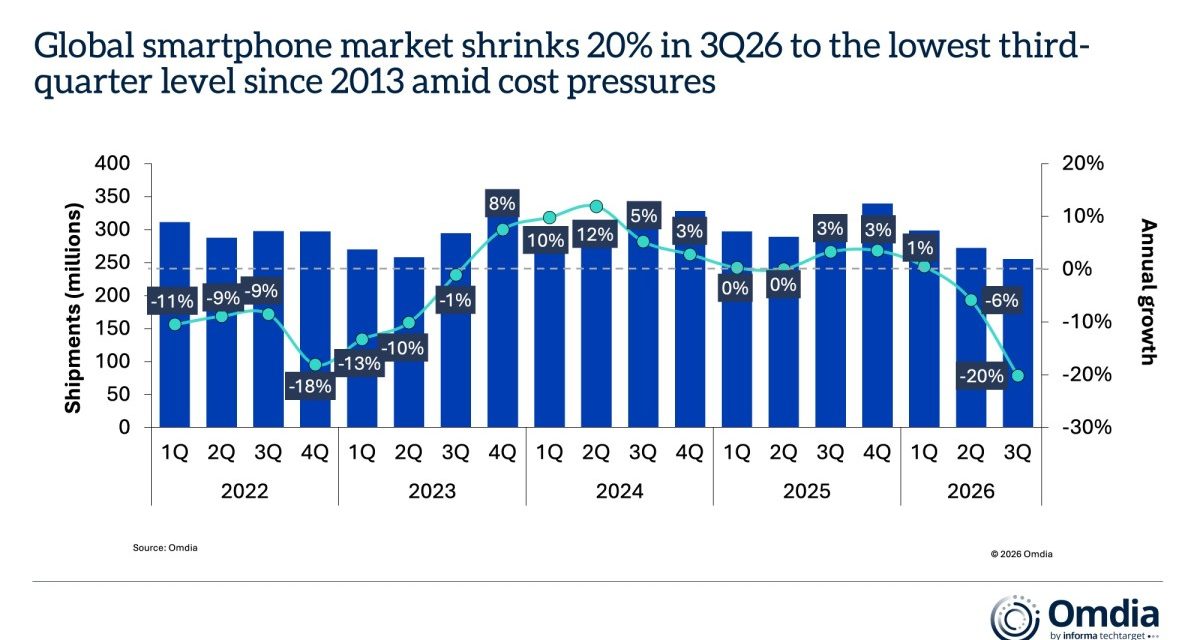
According to Omdia’s preliminary estimates, global smartphone shipments fell 20% year on year in the third quarter (3Q) of 2026, a sharp acceleration from the 6% decline recorded in the previous quarter.
Shipments also declined sequentially despite new flagship launches and channel preparations for the year-end festive season. Persistent memory and storage cost pressures have constrained pricing flexibility and prompted vendors to scale back shipments of low-margin devices, according to Omdia.
The research group says the downturn has further polarized the competitive landscape. Samsung and Apple together accounted for 45% of global shipments, up approximately 8 percentage points from a year earlier. Their relative resilience compared with sharper declines among mass-market-focused competitors indicate that the current downturn is reshaping competitive positions.
Samsung retained the top position with a 23% market share, gaining share despite a year-on-year decline in shipments. Its broad product portfolio and established global channel presence helped cushion the impact of the market downturn, while the August launch of the Galaxy Z Fold8 and Flip8 series supported its premium positioning.
Apple ranked second with a 22% market share, showing strong resilience despite the wider market downturn. Continued demand for the iPhone 17 family, alongside the September introduction of the iPhone 18 Pro and Pro Max, helped maintain its momentum, according to Omdia.
The iPhone Duo marks Apple’s entry into the foldable smartphone category, expanding its portfolio beyond traditional form factors and creating new opportunities to address evolving consumer needs and capture incremental demand, adds the research group. While AI is not yet a major purchase driver for consumers, Apple Intelligence could play an increasingly important role in differentiating Apple’s user experience and sustaining its long-term ecosystem advantage.
Article provided with permission from AppleWorld.Today