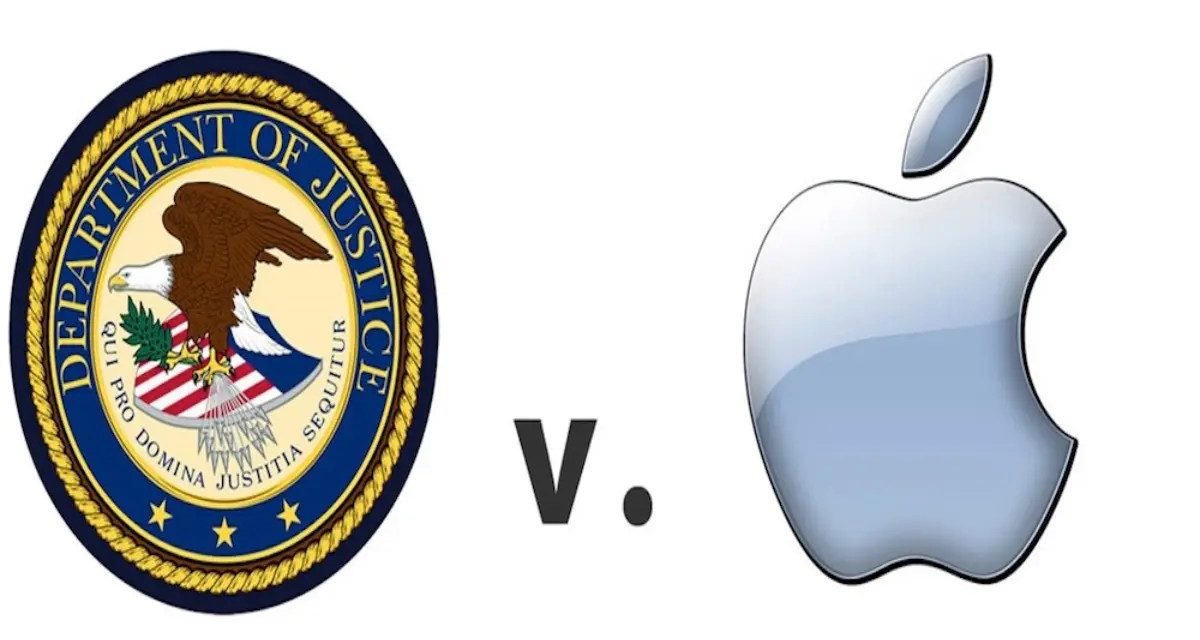
Special Master Jose Linares has rejected the Department of Justice’s request to reconsider his decision allowing Apple to seek documents from 14 separate government agencies in the antitrust case against the company, reports 9to5Mac.
In July the US Department of Justice (DoJ) asked a federal court to reconsider a recent ruling that would allow the tech giant to do just that in its antitrust case. Earlier that month it was reported that Apple had won a discovery fight in their ongoing 2024 Department of Justice antitrust lawsuit, successfully blocking subpoenas they issued to 14 federal agencies—including the CIA, FBI, and NASA—that sought internal documents on how these agencies evaluate and purchase smartphones.
The subpoenas served to federal agencies were ruled overbroad and too burdensome, particularly because many requested documents involve classified or privileged material.
Then the DOJ, backed by declarations from officials at several federal agencies and offices, asked Judge Jose Linares to reconsider that decision. Notably, neither the Commerce Department nor the FTC submitted a declaration, noted 9to5Mac.
In its motion, the DOJ argues that Linares applied the wrong legal standard by treating the agencies as parties to the case rather than non-parties entitled to greater protection from discovery.
From the filing: Federal agencies are not automatically subject to “party” discovery any time the United States files a case; rather, courts must perform a fact-specific assessment of the relationship of a federal agency to each case.3 The Order did not perform the correct fact-specific assessments in concluding that none of the 14 federal agencies are entitled to the greater protection afforded to non-parties under Rule 45. That was clear error.
Today 9to5Mac reports that Linares has now issued his new decision, concluding that “none of [the DOJ’s] arguments in support of its application for reconsideration are persuasive,” and leaving his original ruling in place.
This recent clash is fundamentally separate from Apple’s ongoing battles over device encryption. Historically, Apple has clashed with the FBI over refusing to build “backdoors” or write custom software to unlock iPhones used by suspects in cases like the San Bernardino and Pensacola attacks.
I hope you’ll help support Apple World Today by becoming a patron. Almost all our income is from Patreon support and sponsored posts. Patreon pricing ranges from $2 to $10 a month. Thanks in advance for your support.
Article provided with permission from AppleWorld.Today