
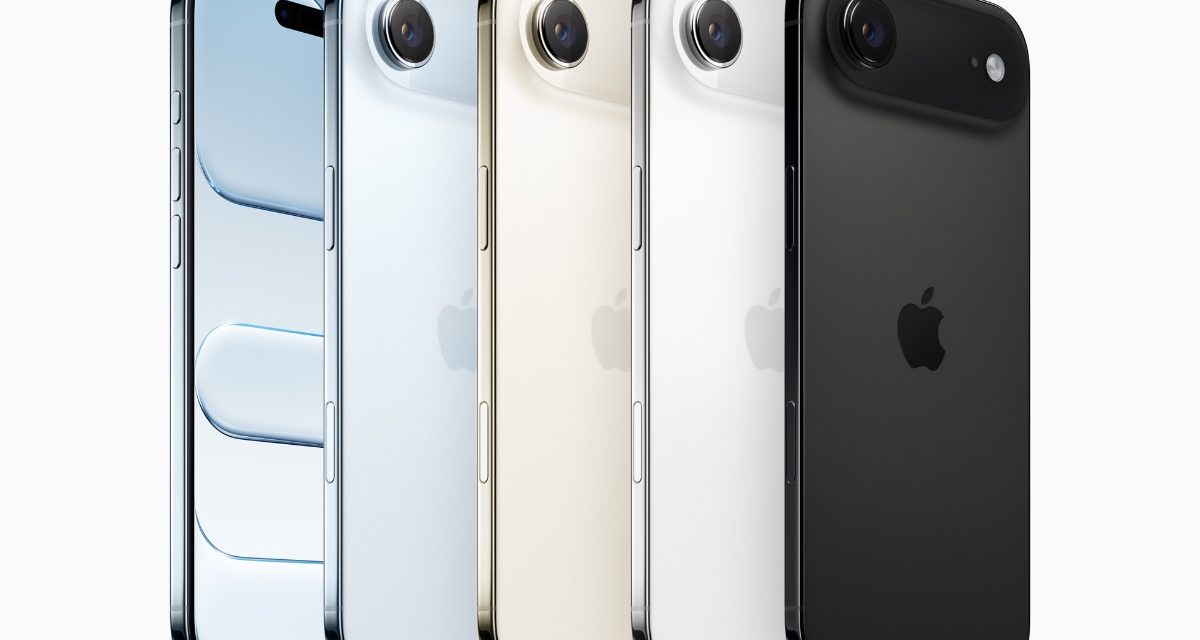
For several years, China held back the adoption of eSIMs in smartphones due to regulatory and security considerations. However, in October the country’s Ministry of Industry and Information Technology finally approved nationwide eSIM trials for smartphones, and all three major carriers started offering eSIM services, officially bringing eSIM use in the world’s largest smartphone market.
However, the rollout in China is still tightly controlled. To activate an eSIM, users must verify their ID in person at a carrier store. China Unicom allows appointments online but customers are still required to physically verify their IDs.
Apple Leads the Way
Apple was the first to take advantage of the new rules. In October the tech giant launched the iPhone 17 Air, China’s first eSIM-only iPhone. Counterpoint Research says this works in Apple’s favor as it can sell one global model instead of making a special version just for China. However, complying with local regulations means that Chinese iPhones only support domestic eSIMs, while foreign eSIMs continue to remain unavailable. Nevertheless, the new eSIM-only iPhone 17 Air — which may or may not be a sales success globally — gives Apple a strategic advantage within China’s premium market and strengthens its global supply chain by simplifying production, according to Counterpoint.
I hope you’ll help support Apple World Today by becoming a patron. Almost all our income is from Patreon support and sponsored posts. Patreon pricing ranges from $2 to $10 a month. Thanks in advance for your support.
Article provided with permission from AppleWorld.Today