


Incogni, a personal data removal service and data privacy company, has released a new report, “Stressed-out, exposed, and beleaguered by slop: How attitudes towards the internet are changing in 2026.”
It closely follows the company’s recent study, “The Great Digital Fatigue: How Digital Burnout Is Changing Social Media Use,” which surveyed 1,000 Americans and found that more than half of respondents post less on social media than they did five years ago. This follow-up analysis examines those findings through a privacy and cybersecurity lens, highlighting how concerns over personal data, AI-generated content, and online trust are contributing to digital withdrawal.
Among the key findings of the new report:
- 52% of Americans believe their personal data will be exposed in a data breach.
- Among those who expect a breach, 63% say that the possibility makes them anxious.
- 50% regret sharing personal information online.
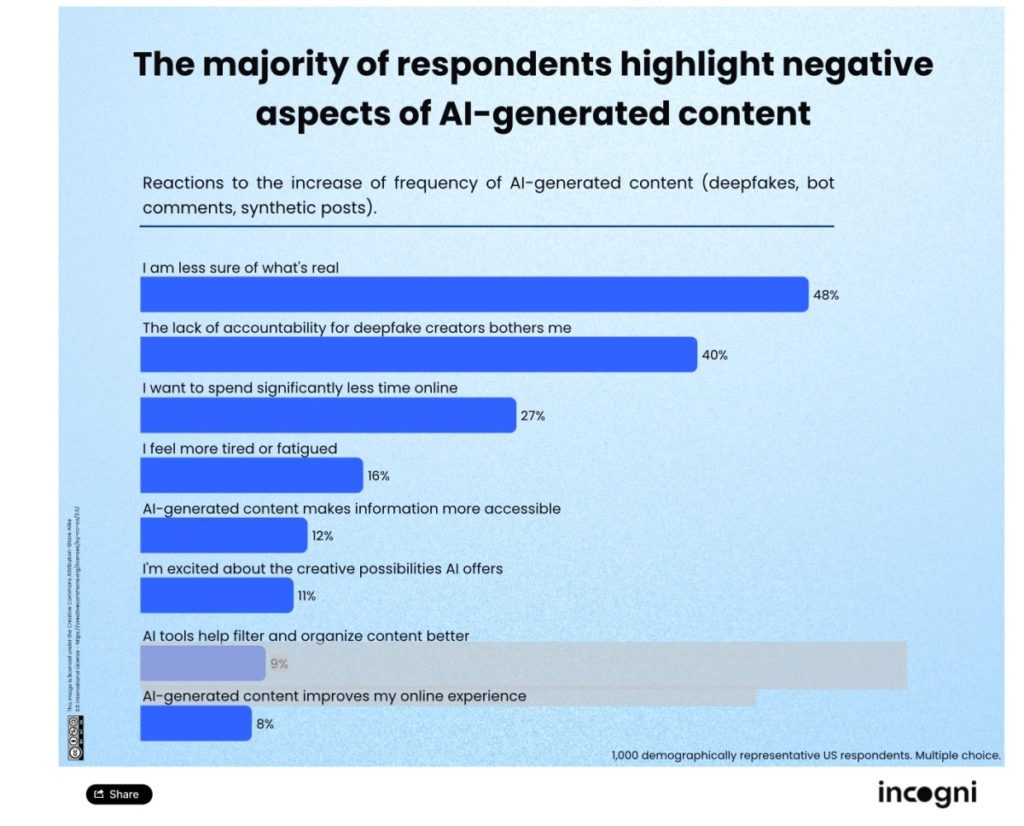
- 48% say AI-generated content has made it harder to know what is real online.
- 43% believe they spend too much time consuming online content.
- 58% have deleted at least one social media or messaging account because of stress, anxiety, or privacy concerns, including 41% who cited privacy specifically.
- 29% would pay for an internet without tracking or algorithmic feeds.
CEO Darius Belejevas says Incogni’s analysis suggests repeated headlines about data breaches have created a sense of resignation among consumers. Rather than viewing cyber incidents as isolated events, many now see them as an unavoidable consequence of engaging online.
That expectation, combined with growing skepticism toward AI-generated content, appears to be reshaping how people think about sharing information, interacting on social media, and maintaining a digital presence.
“The Internet is no longer the safe space we once imagined,” Belejevas says. “Our study confirms that Americans are increasingly wary, questioning whether they can trust the platforms they use everyday. As we struggle with distinguishing authentic content from AI-generated material, it is becoming clear that ‘free’ services come at a high cost: our personal data. While understanding these risks is a necessary first step, taking proactive control of one’s digital footprint is the only way to restore balance.”
Methodology
The analysis is based on responses from 1,000 Americans surveyed between June 1 and June 9, 2026. The survey was conducted through Cint using a nationally representative sample based on age and geographic distribution.
Article provided with permission from AppleWorld.Today