


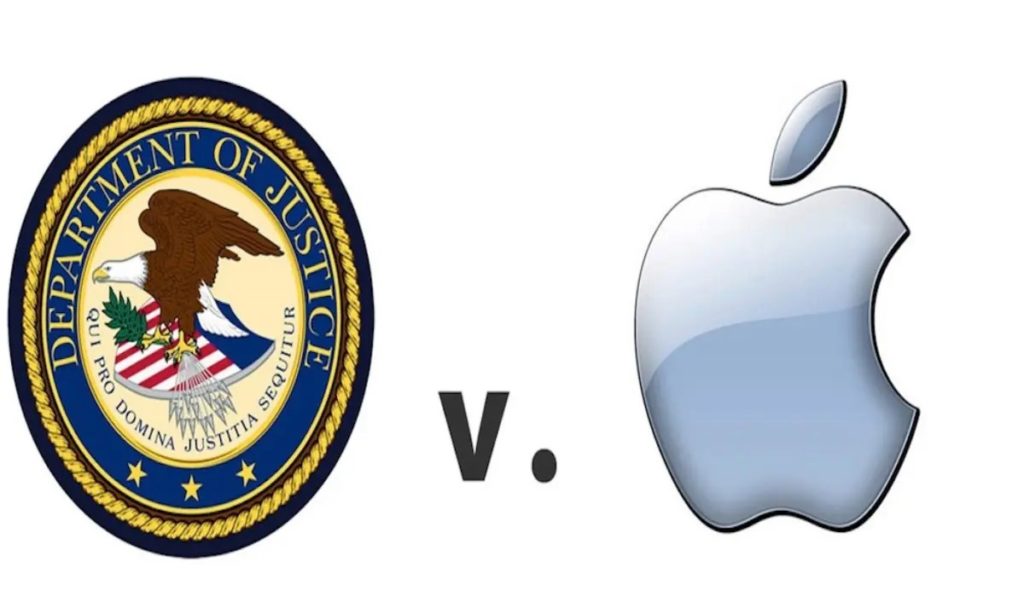
In a new filing Apple is accusing the United States government and the 14 agencies being subpoenaed of halting its antitrust case, reports AppleInsider.
From the filing: The United States, having brought this action, cannot avoid its discovery obligations by putting Apple through an endless procedural runaround. The parties have discussed these issues repeatedly over the past year, but those efforts have not resulted in a resolution. Apple is entitled to obtain relevant, narrowly targeted materials from a small subset of the United States’ own agencies, and Apple therefore respectfully requests that the Court order the United States to produce the materials requested in Apple’s final compromise proposal, attached as Appendix A.
As noted by AppleInsider, here are Apple’s rebuttal against the five claims made by the DOJ:
- DOJ says Apple stifles the success of “super apps,” despite the fact that Apple’s rules allow and support such apps, and indeed a multitude of “super apps” exist on the App Store today.
- DOJ says Apple blocks cloud streaming games, even though Apple allows streaming-games both over the web and in the App Store where they can stream games directly to users.
- DOJ says Apple degrades third-party messaging apps, even though they are widely available and enormously popular on iPhone already.
- DOJ says Apple limits the functionality of third-party smartwatches, even though they can effectively pair with iPhone, share data to and from the iPhone via a companion app, and take advantage of certain functionalities Apple has developed which are expanding over time.
- DOJ says Apple withholds access to iPhone hardware necessary for third-party digital wallets to use tap-to-pay technology, however, Apple developed and provides a mechanism that protects user.
In May 2024 the DOJ filed the lawsuit, alleging that Apple monopolizes smartphone markets. From the DoJ announcement: The complaint, filed in the U.S. District Court for the District of New Jersey, alleges that Apple illegally maintains a monopoly over smartphones by selectively imposing contractual restrictions on, and withholding critical access points from, developers. Apple undermines apps, products, and services that would otherwise make users less reliant on the iPhone, promote interoperability, and lower costs for consumers and developers. Apple exercises its monopoly power to extract more money from consumers, developers, content creators, artists, publishers, small businesses, and merchants, among others. Through this monopolization lawsuit, the Justice Department and state Attorneys General are seeking relief to restore competition to these vital markets on behalf of the American public.
However, Apple has said the case should be dismissed because the DOJ’s lawsuit doesn’t meet the legal standards required to prove a violation of Section 2 of the Sherman Act.
From Apple’s earlier filing: Ultimately, this case is foreclosed by longstanding antitrust law. This Court should reject the Government’s invitation to forge a new theory of antitrust liability that no court has recognized, based on five disparate examples of Apple design choices that do not harm smartphone competition. And to the extent the Government seeks to use these five examples to seize unprecedented authority to control Apple design choices more broadly, the case is even more far-fetched. Such a sweeping rule, if recognized, would harm innovation and risk depriving consumers of the private, safe, and secure experience that differentiates iPhone from every other option in the marketplace. The complaint should be dismissed.
I hope you’ll help support Apple World Today by becoming a patron. Almost all our income is from Patreon support and sponsored posts. Patreon pricing ranges from $2 to $10 a month. Thanks in advance for your support.
Also, check out my daughter-in-law’s “Scattered Words” website if you’re interested in unique, handcrafted jewelry made out of an array of vintage dictionaries, books, and even a few antiques.
Article provided with permission from AppleWorld.Today